




















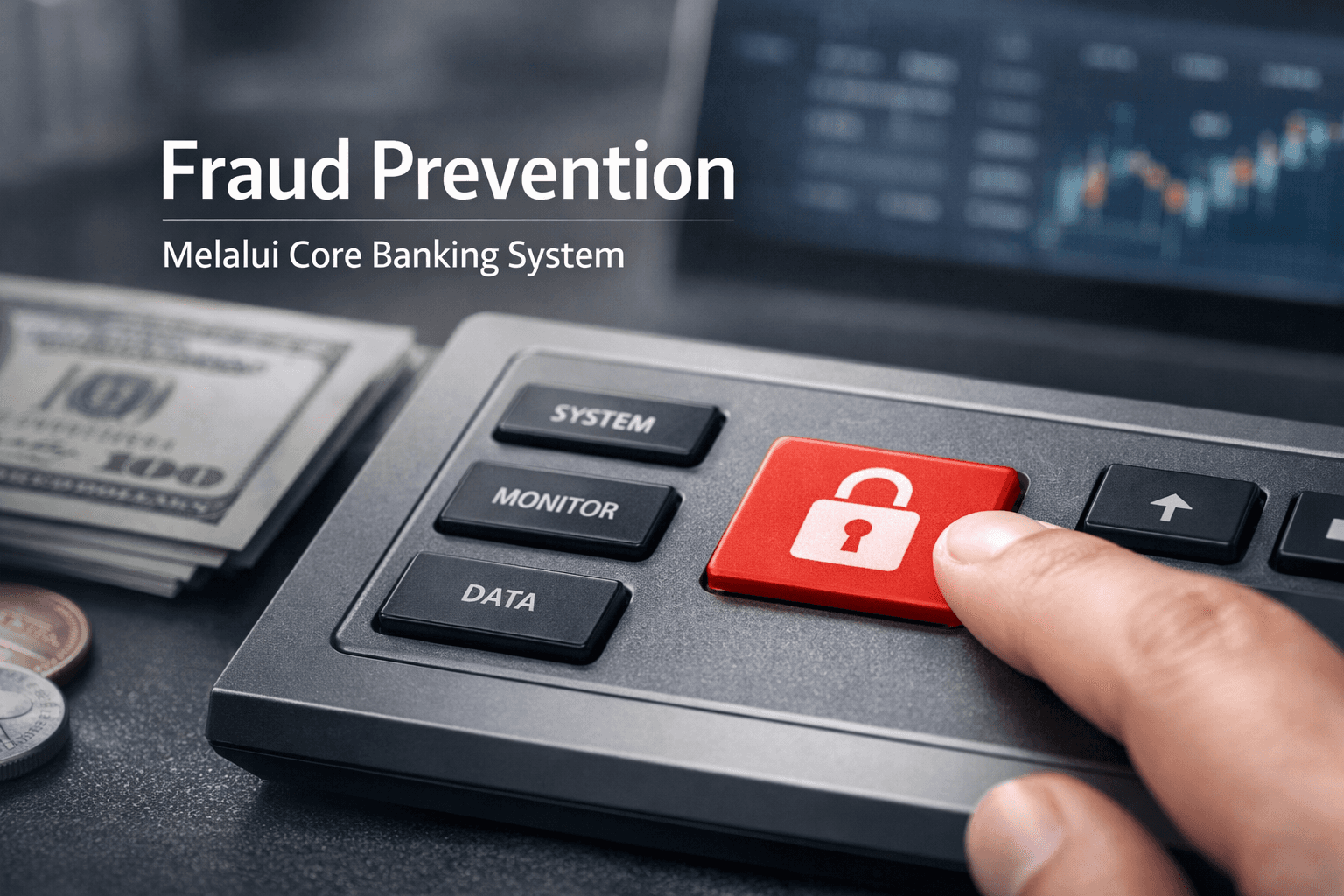
Core Banking System (CBS) plays a crucial role in preventing fraud in banking, through monitoring transactions in real-time, integrated security controls, and effective risk management.
Fraud Threats in the Digital Banking Era
As the use of digital banking services increases, the risk of banking fraud also becomes more complex. The modes of deception not only target customers but also aim at the operational systems of banks. Therefore, a strong system foundation is needed to detect and prevent fraud early on, one of which is through the Core Banking System (CBS).
Core Banking System becomes the center for data and transaction processing, thus playing a strategic role in maintaining the security of the banking ecosystem.
The Role of Core Banking System in Fraud Prevention
Core Banking System is designed to manage transactions centrally and in real-time. With these characteristics, the core banking system is capable of being at the forefront in preventing banking fraud.
Some of the main roles of Core Banking System in preventing fraud include:
1. Monitoring Transactions in Real-Time. CBS allows banks to monitor all transactions directly. Suspicious activities, such as transactions with unusual patterns or deviant transaction values, can be detected more quickly.
2. Application of Rules and Security Controls. CBS supports the application of business rules and transaction limits tailored to customer risk profiles. This helps prevent account misuse and illegal transactions.
3. Integration with Anti-Fraud Systems. CBS can be integrated with anti-fraud systems, fraud detection systems, and analytical technologies to improve fraud detection accuracy.
Features of Core Banking System that Support Fraud Prevention
Modern Core Banking System is equipped with various security features, including:
Audit Trail and Activity Logging. All transaction activities and system access are clearly recorded for monitoring and investigation purposes.
Access Management. User role settings and authorization prevent unauthorized access to critical data and functions.
Transaction Validation and Authorization. Each transaction undergoes a layered validation process before being processed by the system.
Layered Authentication Integration. Supports multi-factor authentication to enhance transaction security.
Benefits of Fraud Prevention for Banks and Customers
The implementation of fraud prevention through Core Banking System provides significant benefits, including:
Reducing financial losses due to fraud
Protecting customer data and funds
Maintaining reputation and trust in the bank
Meeting compliance requirements with banking regulations
With a reliable system, banks can manage risks proactively rather than reactively.
Core Banking System as the Foundation of Banking Security
Fraud prevention cannot rely on just one layer of security. The Core Banking System functions as the main foundation that connects all transaction channels, including branches, ATMs, mobile banking, and digital payment systems.
With a strong foundation, banks can develop integrated and sustainable layered security strategies.
Fraud prevention through the Core Banking System is a strategic step in facing security challenges in the digital banking era. Through real-time monitoring, integrated security controls, and modern technological support, the Core Banking System helps banks protect assets, data, and customer trust comprehensively.