




















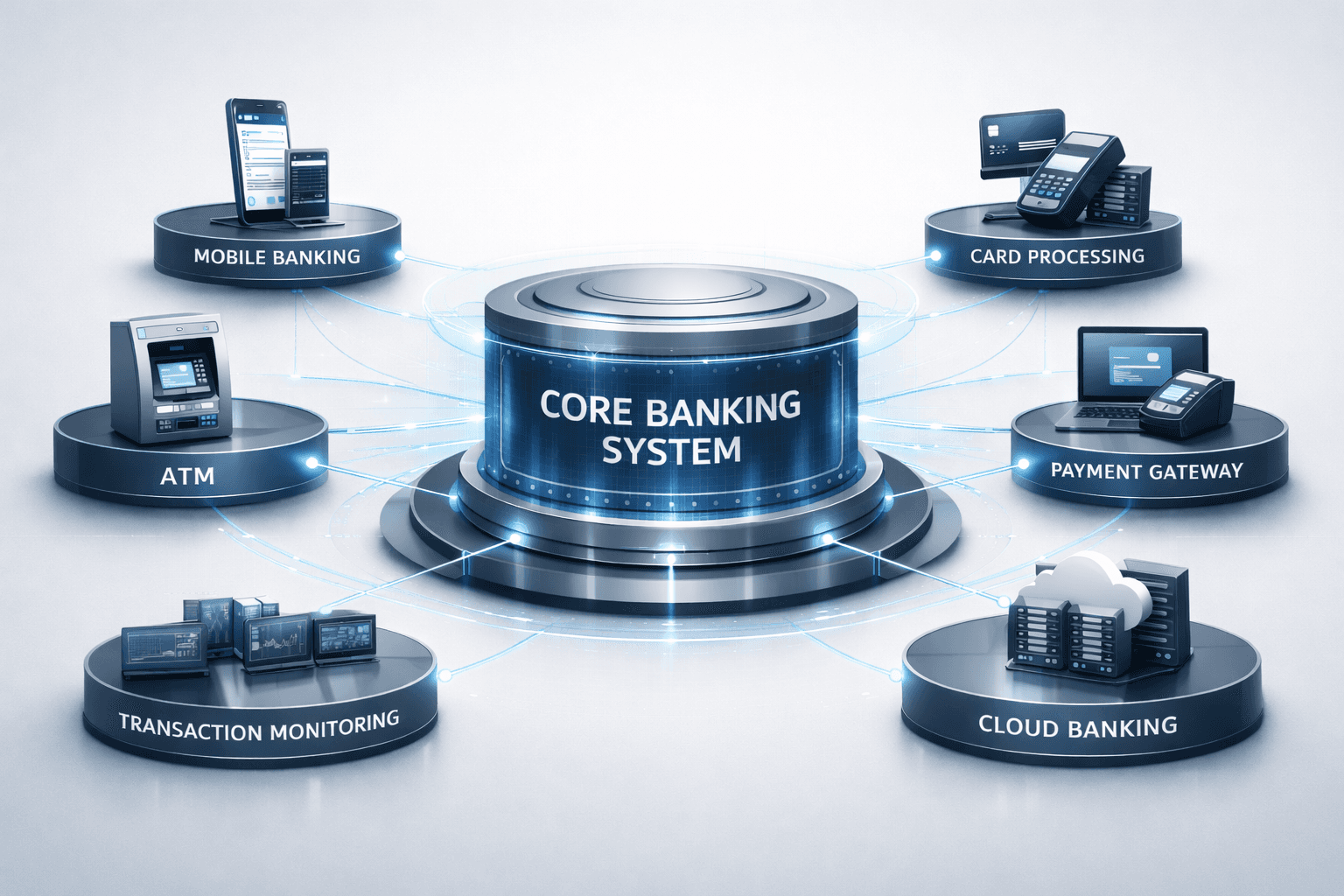
The development of digital technology has transformed the way the banking industry operates. Services that were previously only available at branch offices can now be accessed through smartphones in seconds. Behind this convenience is a primary system that serves as the operational foundation of banks, namely Core Banking System.
The Core Banking System (CBS) is the core system that manages all banking activities, ranging from customer account management, payment transactions, fund transfers, credit management, to financial data storage. This system allows all bank branches to be connected within one integrated network so that transactions can be processed in real-time.
With the increasing demand for digital services, the role of the Core Banking System has become increasingly crucial. Banks are not only required to provide fast services but also safe, flexible, and able to integrate with various digital platforms.
Challenges of Traditional Core Banking Systems
Many banks around the world still use core banking systems built decades ago. These systems generally use outdated technology architecture that is difficult to adapt to current digital developments.
When banks want to add new services such as mobile banking, fintech integration, or digital payments, the old systems often require complex and time-consuming development processes. This slows down innovation compared to fintech companies that have more flexible technology systems.
Therefore, modernizing the Core Banking System has become an important agenda for many financial institutions.
Cloud-Based Core Banking System
One of the main trends in the future of the Core Banking System is the use of cloud computing. With cloud technology, banks can run their systems on more flexible and scalable infrastructure.
The main advantages of cloud-based core banking include:
Higher scalability to handle increasing transaction volumes
Reduction of technology infrastructure costs
Faster system implementation
Better system recovery capabilities during disruptions
With this approach, banks can develop digital services more quickly without having to rely on limited physical infrastructure.
API Integration and the Digital Financial Ecosystem
The development of Open Banking also drives changes in the architecture of the Core Banking System. Modern systems now widely adopt the API (Application Programming Interface) approach that enables integration with various external services.
Through API technology, banks can connect with various digital ecosystems such as:
fintech platforms
digital payment services
e-commerce
investment and financial applications
This integration allows banks to create a wider financial service ecosystem and provide a more practical experience for customers.
Real-Time Banking and Customer Experience
Modern customers expect quick and transparent transactions. Therefore, the future Core Banking System will increasingly steer towards real-time banking.
With this technology, various banking processes such as fund transfers, bill payments, and balance checks can be done instantly without waiting for batch processing like in the old systems.
The speed of this service not only enhances customer convenience but also opens up opportunities for banks to offer various new digital services.
The Role of Artificial Intelligence and Data Analytics
In addition to cloud technology and APIs, the future of the Core Banking System will also be influenced by the development of Artificial Intelligence (AI) and data analytics.
With more advanced data analysis capabilities, banks can understand customer behavior more deeply. This information can be used to:
provide more personalized financial product recommendations
improve fraud detection systems
accelerate credit risk analysis
enhance customer service quality
Effective use of data will help banks make more accurate and strategic business decisions.
Security and Compliance Remain a Priority
Amid rapid digital transformation, system security remains a top priority in developing the Core Banking System. The banking industry has strict regulatory standards concerning data protection and transaction security.
Therefore, new generation core banking systems must be designed with a security-by-design concept, where security aspects are integrated into the technology architecture from the outset of development.
Encryption technology, layered authentication, and real-time transaction monitoring become essential components in maintaining customer trust.
The Future of Core Banking System
Modernizing the Core Banking System is not just about replacing old technologies with new systems. More than that, this transformation is a strategic step for banks to remain relevant in the digital economy era.
With more flexible, integrated, and data-driven systems, banks can provide more innovative services and compete with various new players in the financial industry.
In the future, the Core Banking System will become the main foundation for the emergence of various innovations in digital financial services. This system may not always be visible to customers, but its role is crucial in determining how banks evolve and provide the best services to society.